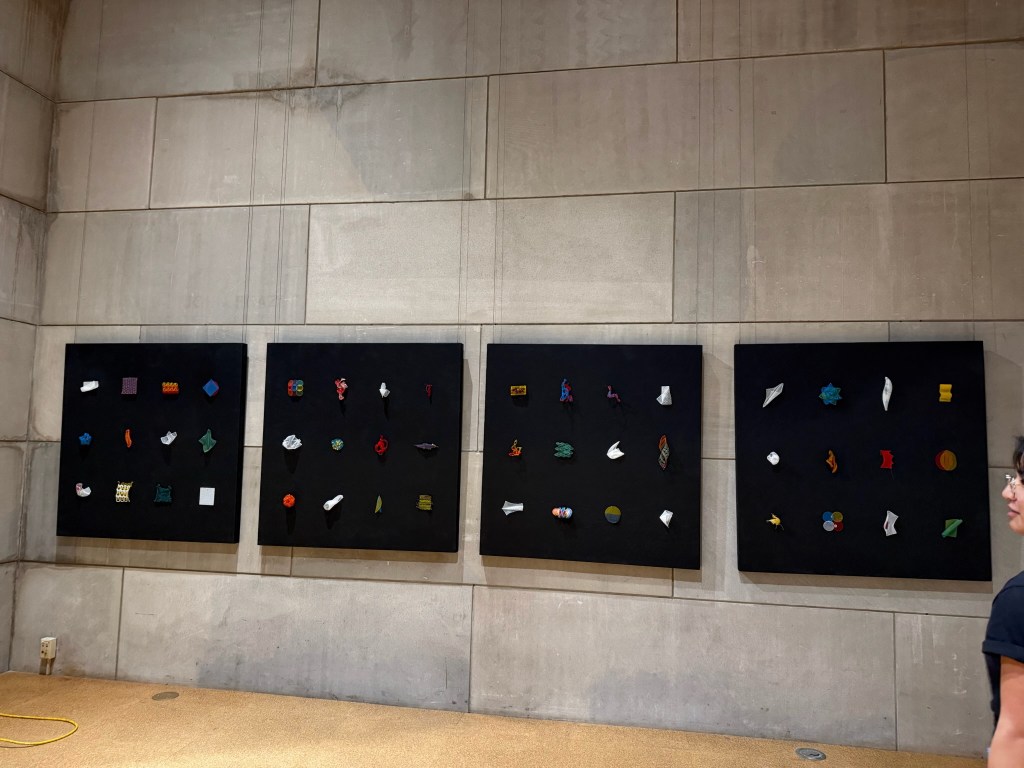
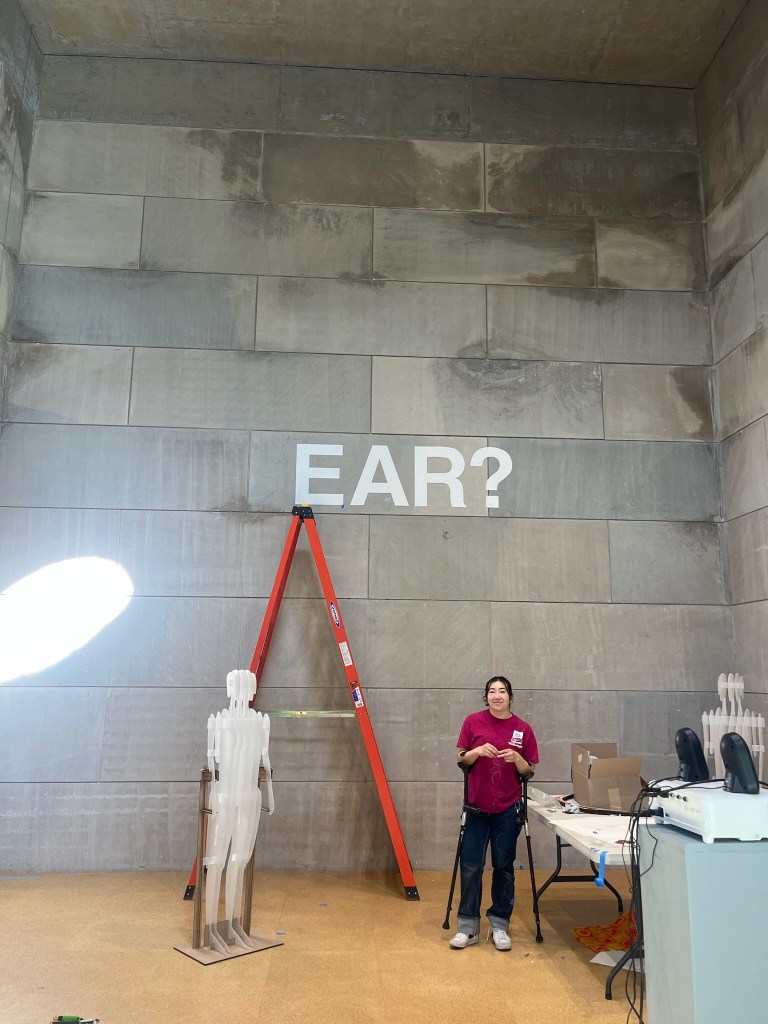
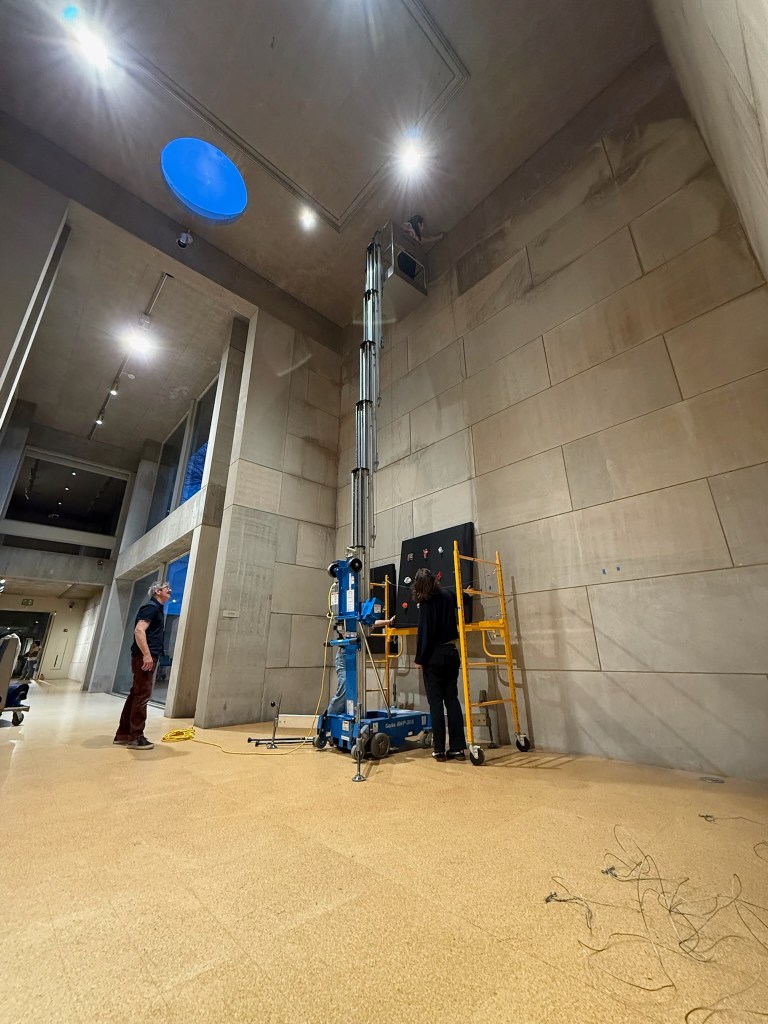
Creating the Exhibition + Install
[Continuation of How Do You Wear? senior thesis]
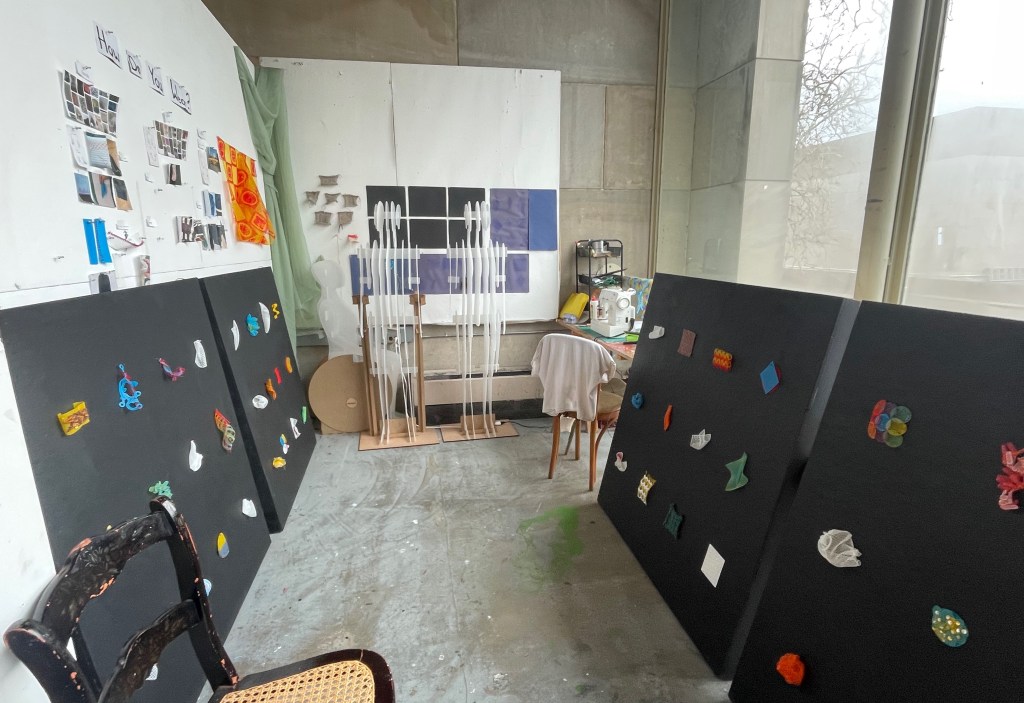
As I prepared to install my thesis in the Zilkha Gallery, I spent time thinking about how my work would sit alongside the Studio Art seniors. What I enjoyed about their projects was that they embraced ambiguity, leaving space for multiple interpretations. That approach influenced me, but I realized I did not want there to be so much ambiguity.

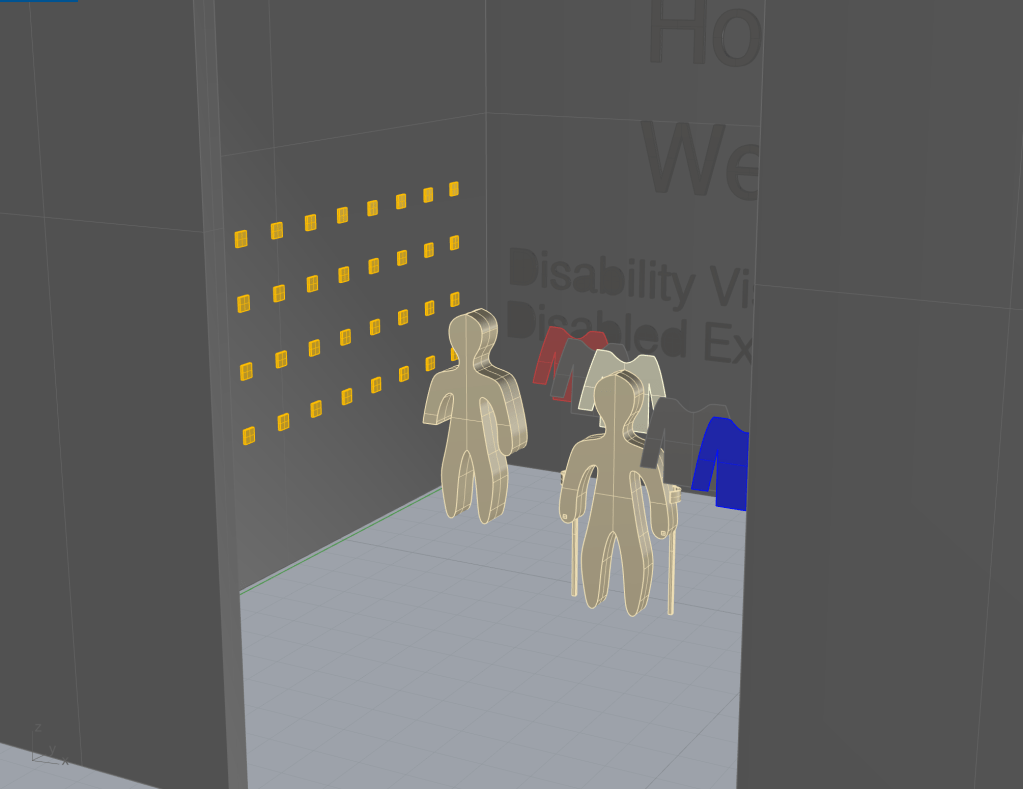
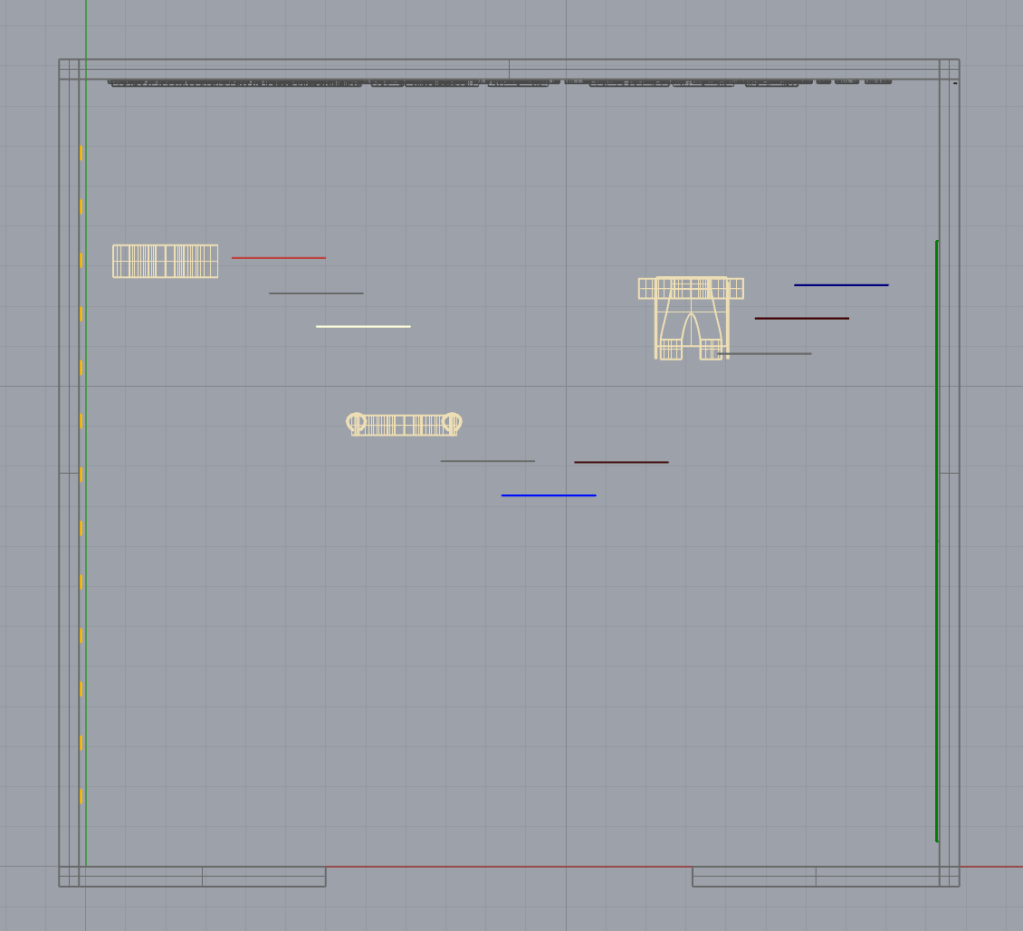

Initial North Gallery Mockups
This work is a story about disability — about friction, tools, and the systems that aren’t designed for us. I didn’t want viewers to leave uncertain. I wanted them to understand that these garments told real stories, and that those stories were worth paying attention to.
As Kat Holmes writes in Mismatch, disabled people move through a world full of small misalignments. My installation aimed to make those mismatches visible.
Body Mapping
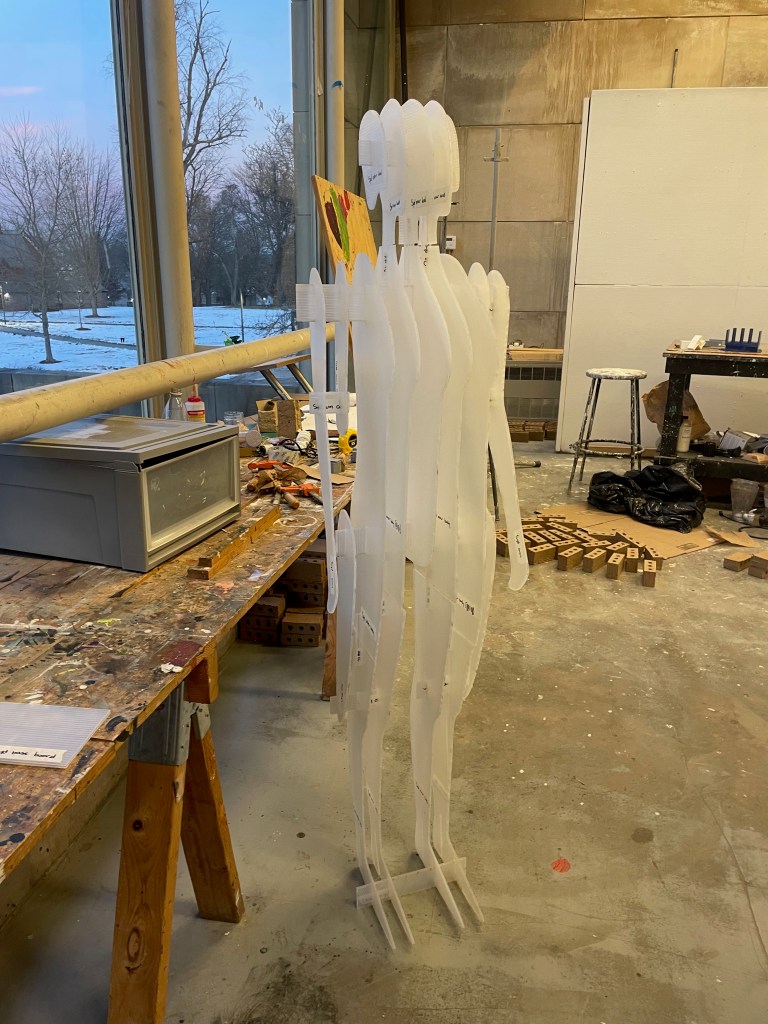
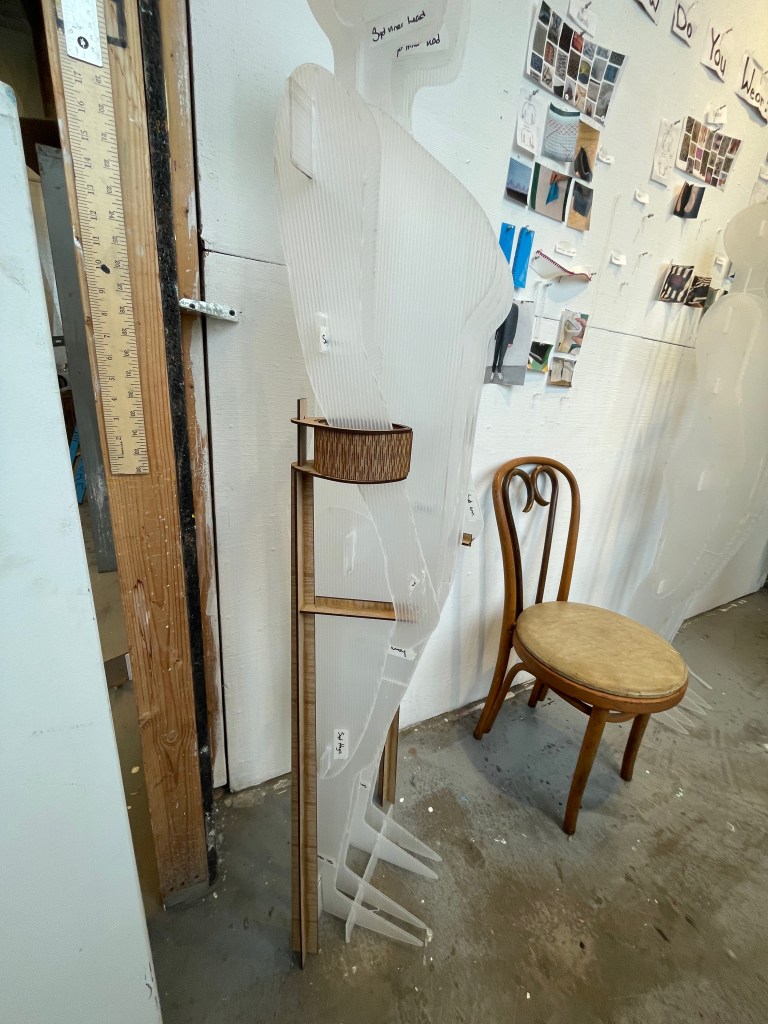
I knew that I wanted to have physical representations of each person (me, Emma, Sarah) in the exhibition so that it would be very clear that this work was talking about bodies and their interactions with adaptive tools. However, in order to honor the wishes of some of co-designers, images of each person could not be used. In some ways, this worked out well because it made me search for more abstract versions of each person. In creating these physical body maps in a single, neutral material I hoped that the initial person would still be represented, but that these people could encompass a much larger demographic at the same time. Design for one, expand to many.

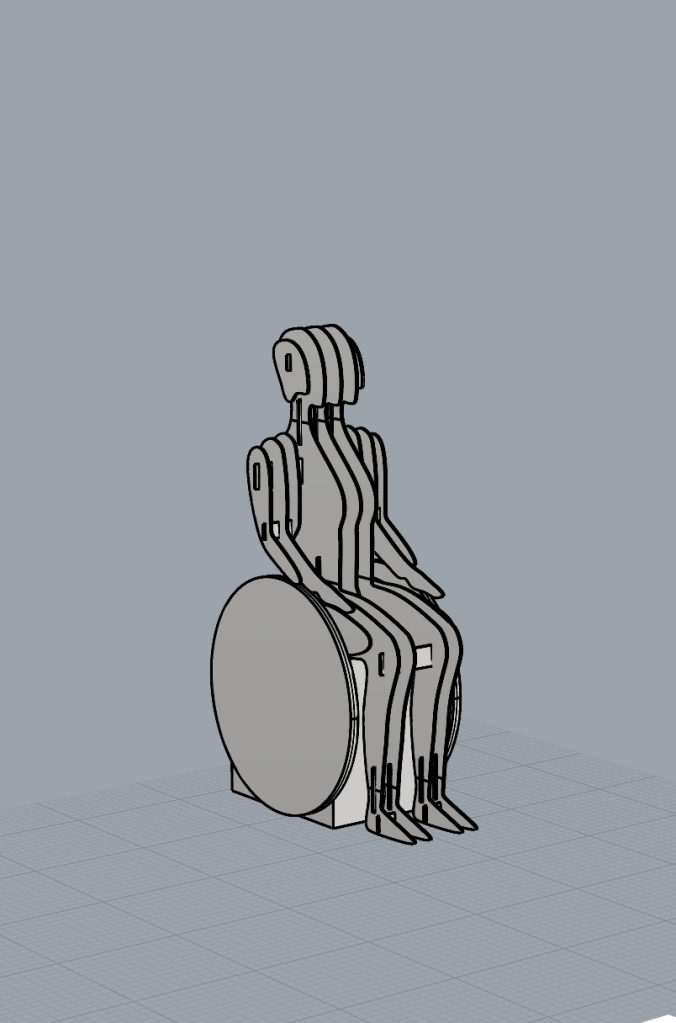
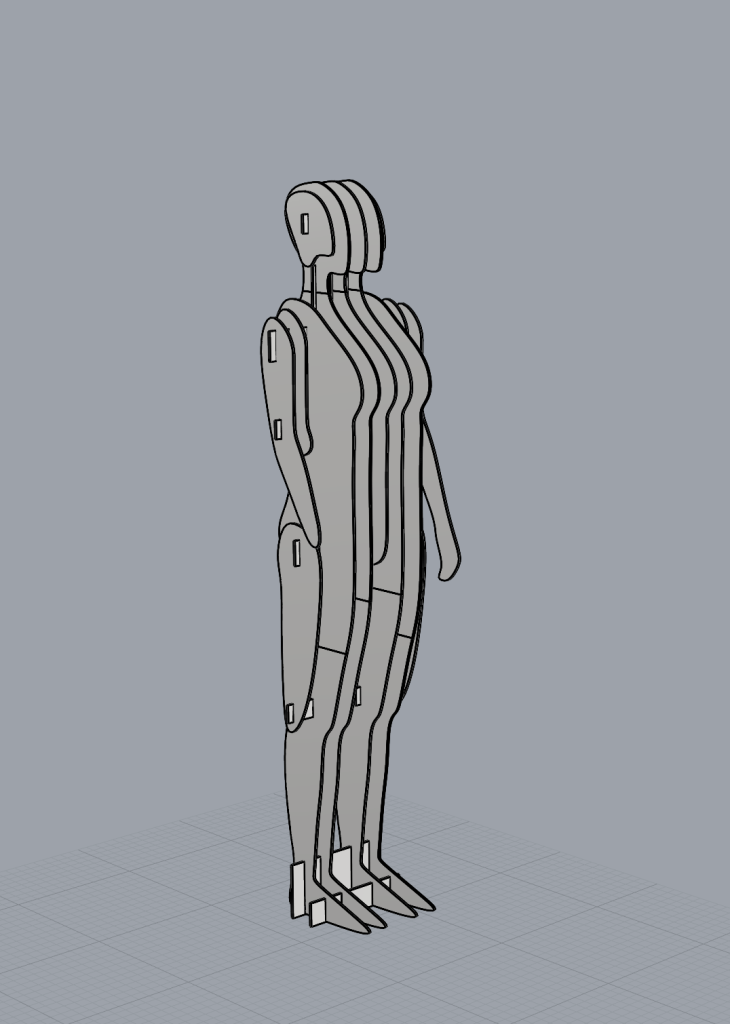
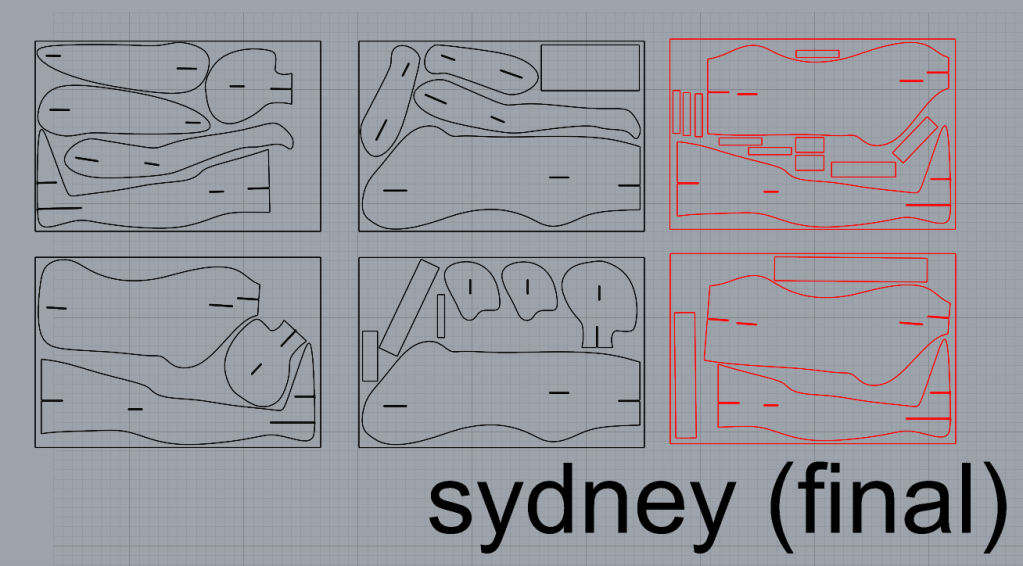
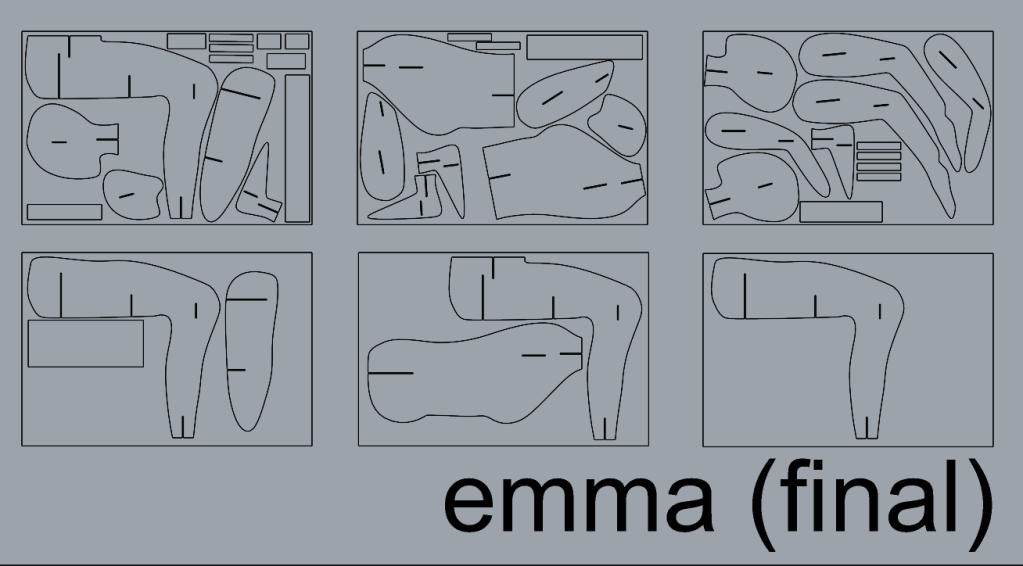

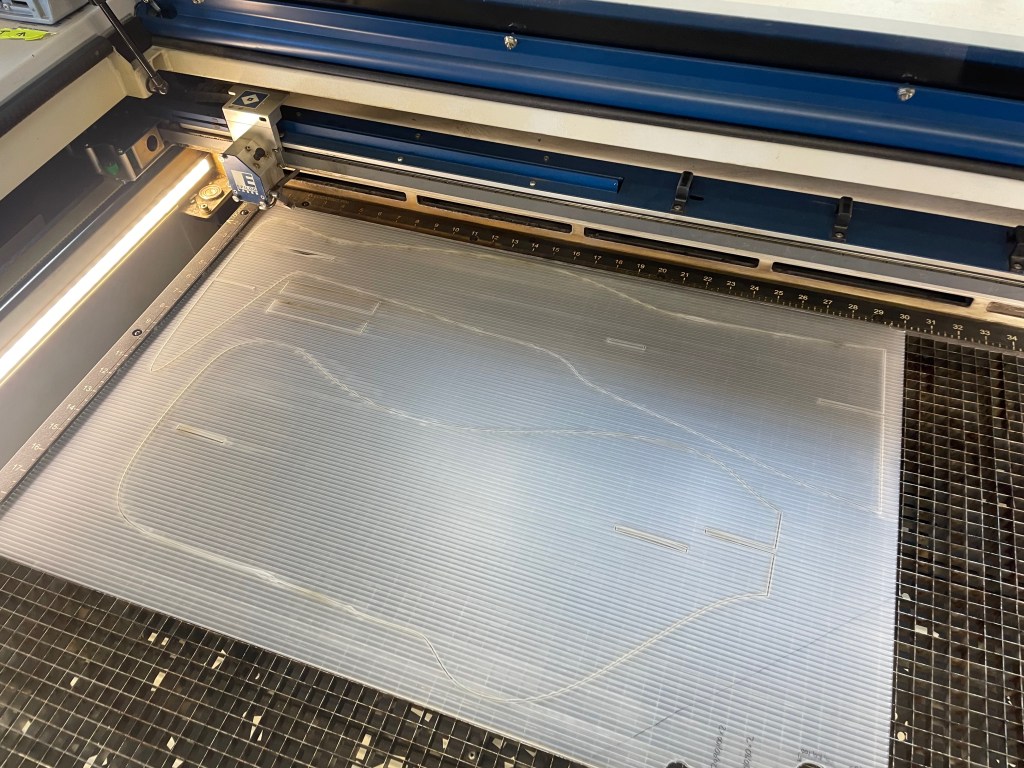
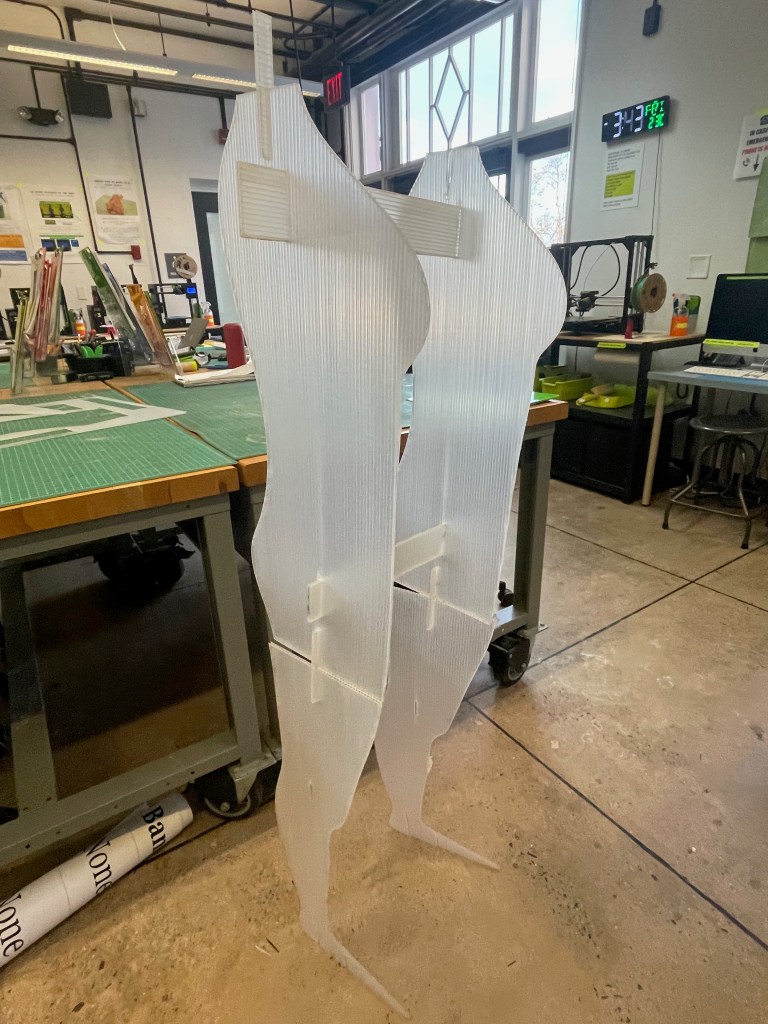
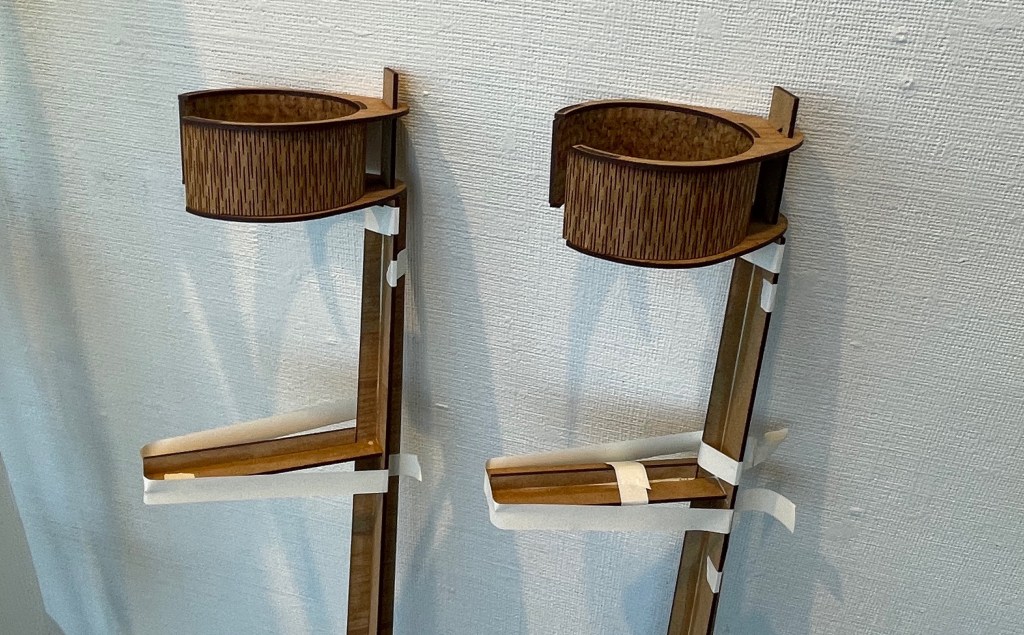
Once I had created the forms in Rhino it took me a lot of research and testing to figure out what material would be sturdy enough to stand up right but still be safe to laser cut as well as what the measurements would be to fit connecting braces through body panels snugly. I ended up with corrugated semi-transparent plastic sheets for the body maps and 1/8inch MDF for the adaptive tools.
One significant problem I ran into was that both the laser cutting bed and corrugated plastic sheets were too small to fit a whole persons height in (20x30inches is what I ended up using). I ended up cutting each person into three sections, staggering the cuts in the thighs for better stability and connecting them with small horizontal rectangles also cut from the corrugated plastic sheets [see above images and videos].



Install
I intended to hang the sweaters and extra versions of each of the patches in North Gallery. In order to do so, I consulted a lot with Paul Theriaults, the lead art preparer for Zilkha, who came up with a plan to suspend five poles from the ceiling that would then told the sweaters in the air by clear fishing line.
Of course, this was easier said than done, and we had less than 40 hours to install so everything no matter how planned out was somewhat rushed. I enjoyed this crazy time though and ended up having a lot of extra help from friends that made the install possible.