Co-Designing Wear
[Continuation of How Do You Wear? senior thesis]

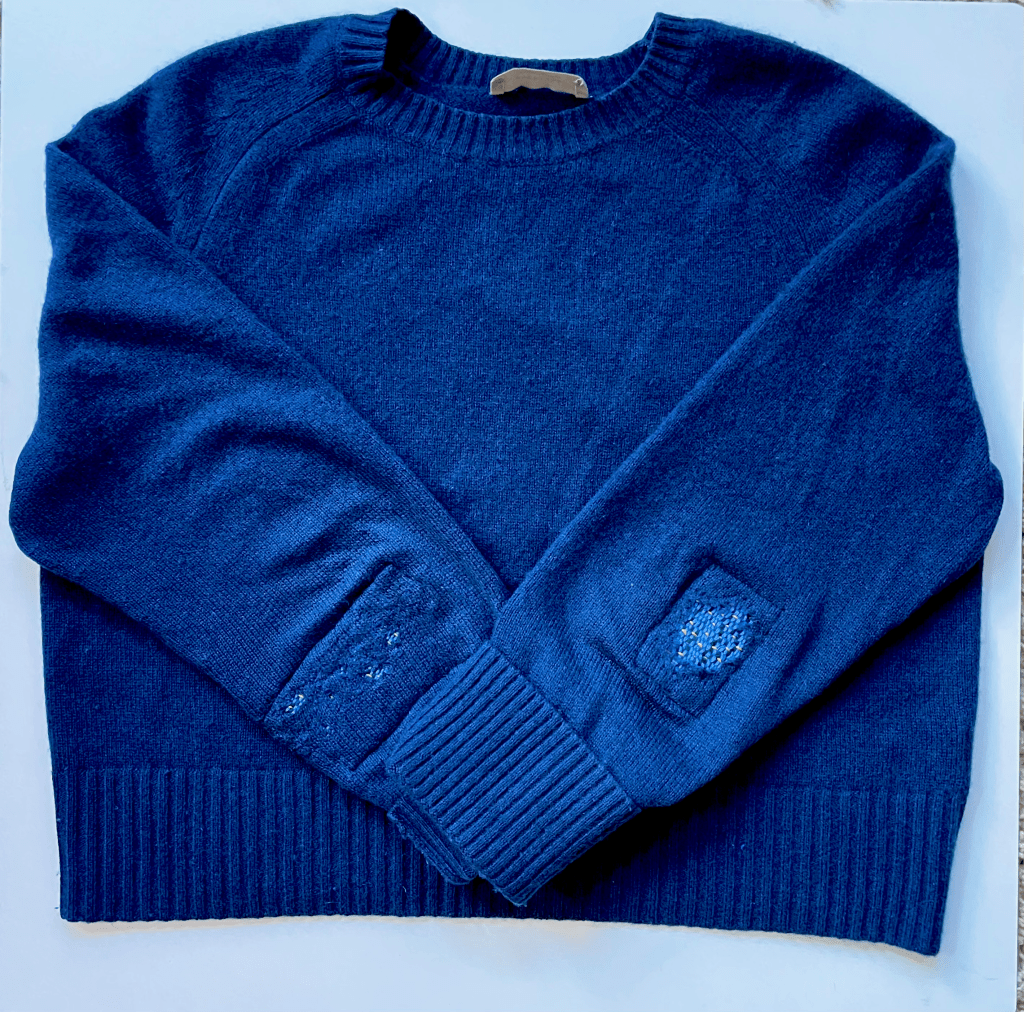
This project began with my own clothing — my own wear patterns, my own story. But from the start, I knew I didn’t want to work in isolation. Disability isn’t a monolith, and neither are the ways our tools and bodies shape the materials around us.

Inspired by Grace Jun’s Fashion, Disability, and Co-Design, I invited two collaborators — Sarah and Emma — into the process. Jun’s framework emphasizes co-design not as token inclusion, but as an ethical and creative imperative: a way of designing with, not for. It was important to me that this project reflect not just my own experience, but the diversity, complexity, and joy of disabled embodiment.
.
.
.
.
.
Sarah
Sarah is a fellow Wesleyan senior and one of the first people I met on campus. She was born without a right hand.
[captions for all audio can be found on the video at the top of the page]
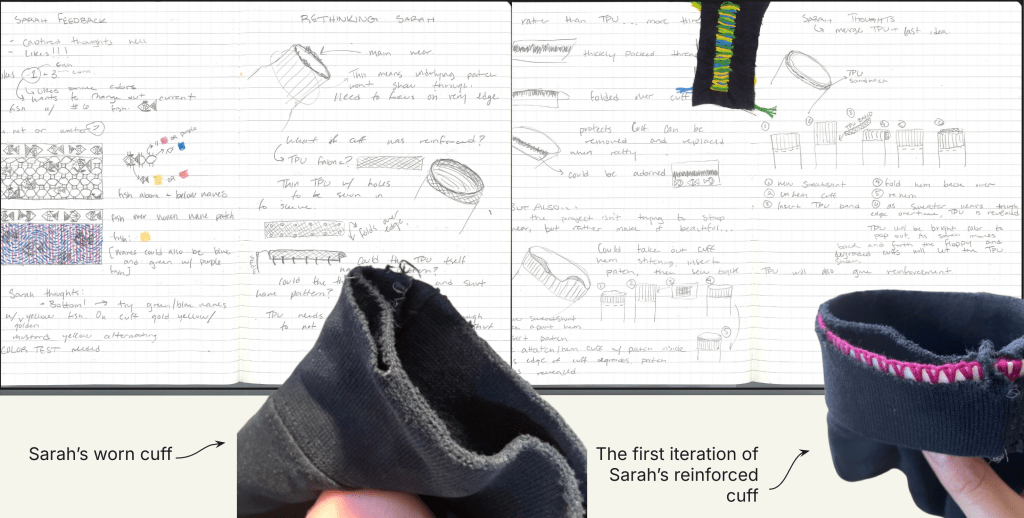
Sarah told me about her long habit of pulling her sleeve down to cover her right arm — a small, daily action that puts significant strain on her sweater cuffs. She wears through the fabric quickly, especially on the right side.



In our co-design sessions, Sarah chose to make this quiet pattern visible. We created a TPU-reinforced cuff (see later 3D printing section) that remains hidden until the surrounding fabric wears away. On her second sweater, she chose to place the strip externally — a reversal that turned the reinforcement into something proudly visible. What began as concealment became expression.
First thinking and work on Sarah’s cuff:

Emma
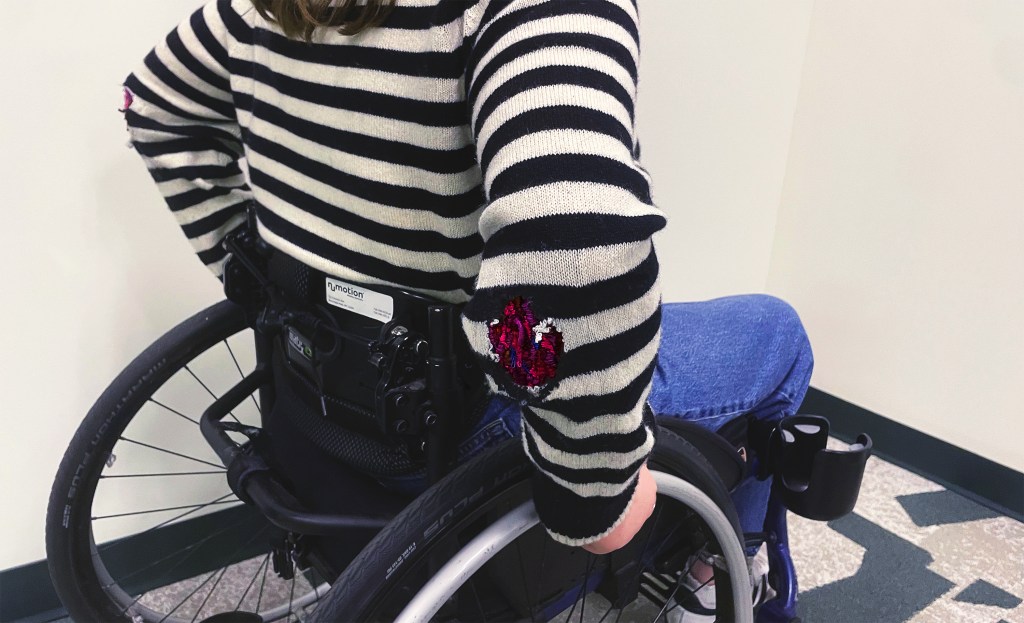
Emma and I met through our shared medical team at Boston Children’s Hospital. She’s a student at Northeastern and a full-time wheelchair user. Like me, she was born with a vascular malformation — and similar to me, she finds that her sweaters tend to wear out quickly at the elbows and hips, where her body rubs against her chair.


Emma told me a story I’ll never forget: once, a student saw her leg and vomited. Two years later, a child touched the same spot and said, “It looks like a galaxy.” That moment became our design cue.
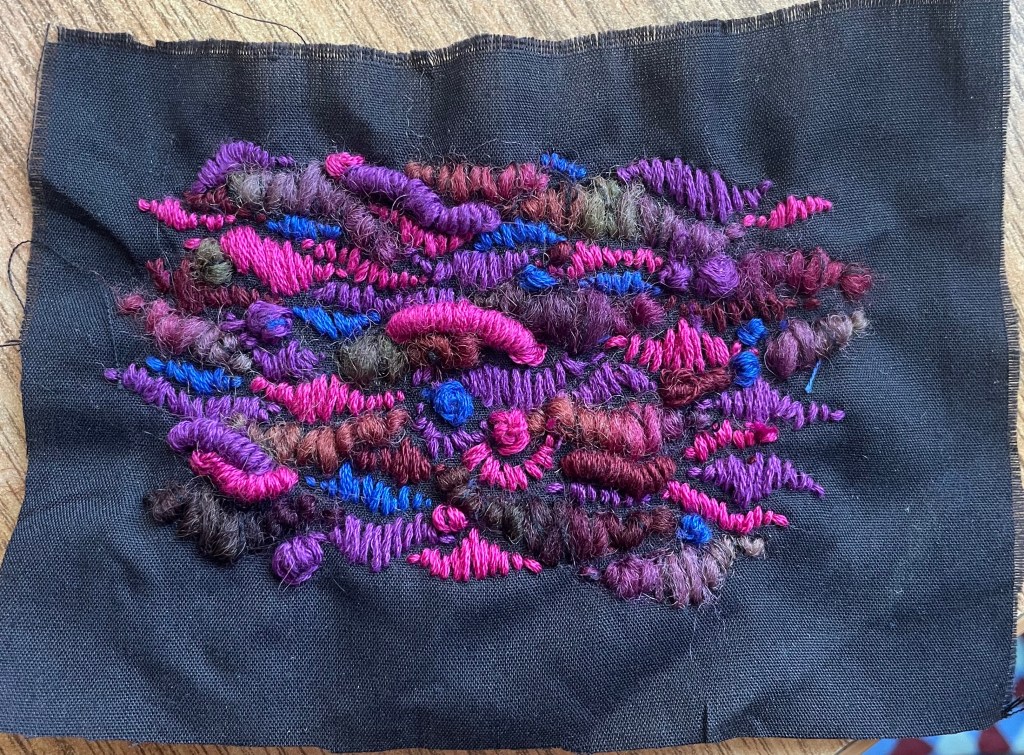
Together, we created patches that echoed the swirling shapes of her veins — abstracted and embroidered beneath the fabric. When the sweater wears down, the galaxy reveals itself.
First iteration’s of Emma’s sweaters:


Why Co-Design is so Important
These collaborations weren’t just additive. They challenged me to rethink the project’s scope. Each person’s wear pattern was shaped by their body, movement, and memory — and each deserved a design solution that matched its emotional and material logic.
Following Jun’s model, I treated each sweater as a site of narrative, care, and authorship — garments that didn’t just solve for wear, but gave space for the meaning behind it.
Co-design allowed this project to move beyond repair into something deeper: a practice of visibility, self-determination, and shared transformation.

